
SPIRIDOLIA
2026
ARCHIVAL INK ON PAPER
spiridolia (n.) | spī-ri-DŌ-lee-ə
1. bittersweet melancholy arising from awareness that time does not progress forward in a straight line, but curls back upon itself in a spiral. Unlike linear nostalgia which longs for a past that is gone forever spiridolia is the recognition that a person will encounter the same seasons, the same emotional landscapes, and the same core conflicts repeatedly throughout life, but always from a slightly higher or lower vantage point on the spiral's axis.
2. The feeling of encountering a "new" moment that is eerily similar to a moment from the distant past, yet fundamentally altered by the accumulation of everything that has happened in between.
3. The quiet resignation that personal growth is not linear progress, but a cyclical return each revolution of the spiral grants clearer vision, but also forces oneself to re-live past grief with sharper eyes.
Etymology:
Coined from the Latin spira (a coil, twist, or spiral) and the Greek -olia (a condition or state of mind, derived from oliaō meaning "to destroy" or "to be vexed," often used in medical terms for mental states).
CAT CHAMBERS:
![]()
BIO:
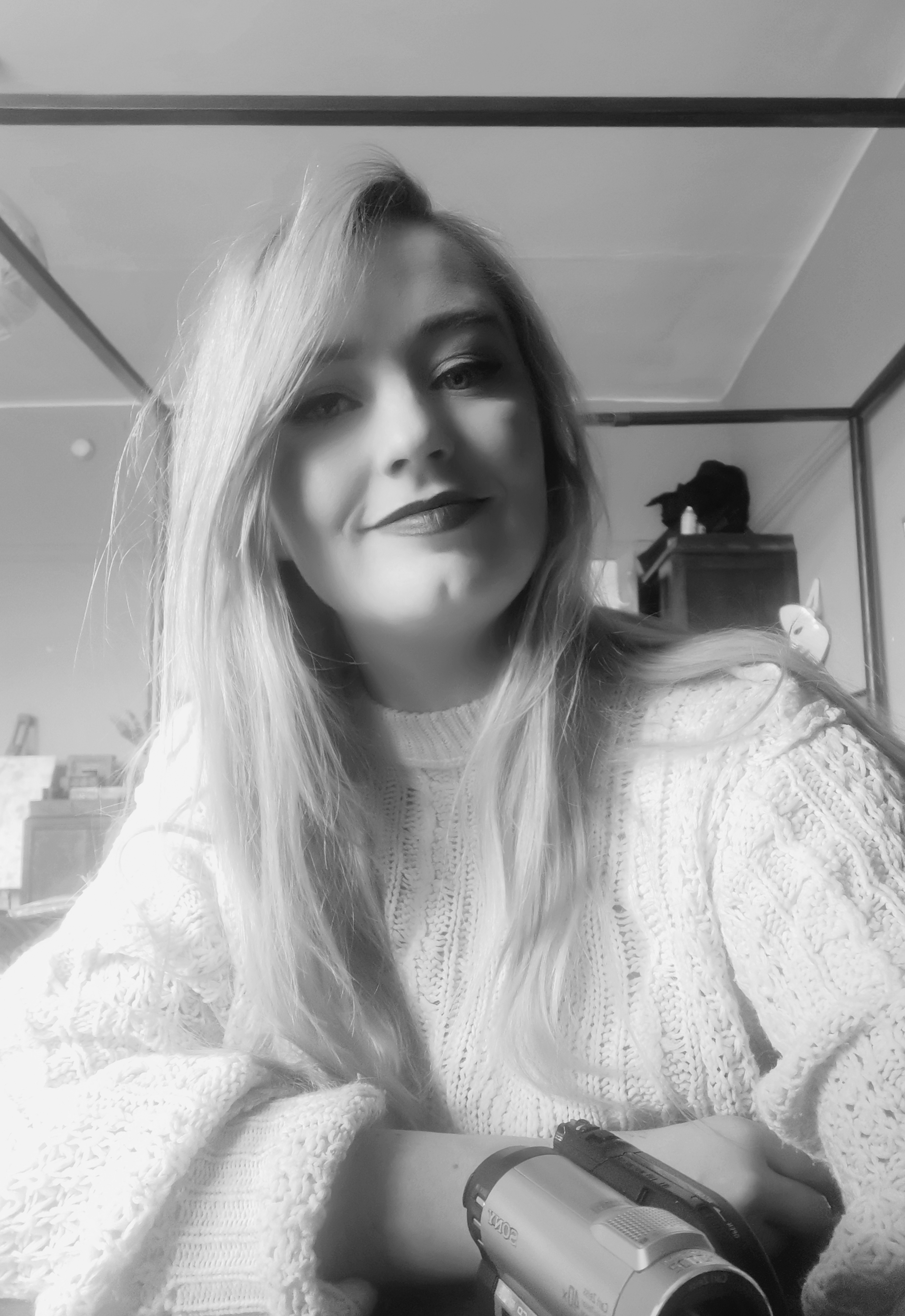
Cat Chambers is a Newcastle Upon-Tyne born and London-based artist/printmaker and creative coder focusing on detailed drawings and intaglio printmaking techniques. UAL. RCA.
Exploring themes of time, belief, fear, mythology and the human condition.
Cat’s work develops from a thorough research methodology which looks to situate often hyper-contemporary subjects within a context of historical and philosophical understanding.
Cat Chambers is a Newcastle Upon-Tyne born and London-based artist/printmaker and creative coder focusing on detailed drawings and intaglio printmaking techniques. UAL. RCA.
Exploring themes of time, belief, fear, mythology and the human condition.
Cat’s work develops from a thorough research methodology which looks to situate often hyper-contemporary subjects within a context of historical and philosophical understanding.
CURRENT WORK:
‘The pandemic reshaped my perception of time, transforming it from a linear progression into something flexible and uncertain. Isolated and away from my studio, days became a blur of dread and stillness.
Immersing myself in long, uninterrupted stretches of reflection. Lens-like, faded memories shifted into focus while recent history coiled and dissolved like forgotten conversations. This period, positioned time as paradox an infinite resource we never seem to possess enough of.
In my current practice, I translate this temporal unease into large-scale, intricate drawings. Solar systems of memory where meaning becomes migratory, shifting with each return gaze- a mirror for the way memory lingers, unfinished.
Using meticulous mark-making, the accumulation of lines mirrors the passage of time itself. Embedded within these layers are fragmented narratives, symbols, and personal history, inviting the viewer to engage in slow, deliberate looking.
By weaving multiple stories into a single composition, I encourage the viewer to revisit the pieces, discovering new connections with each encounter. In doing so, the drawings become a meditation on time, memory, and the act of seeing—prompting us to consider how we measure, experience, and ultimately reclaim our own moments.’
‘The pandemic reshaped my perception of time, transforming it from a linear progression into something flexible and uncertain. Isolated and away from my studio, days became a blur of dread and stillness.
Immersing myself in long, uninterrupted stretches of reflection. Lens-like, faded memories shifted into focus while recent history coiled and dissolved like forgotten conversations. This period, positioned time as paradox an infinite resource we never seem to possess enough of.
In my current practice, I translate this temporal unease into large-scale, intricate drawings. Solar systems of memory where meaning becomes migratory, shifting with each return gaze- a mirror for the way memory lingers, unfinished.
Using meticulous mark-making, the accumulation of lines mirrors the passage of time itself. Embedded within these layers are fragmented narratives, symbols, and personal history, inviting the viewer to engage in slow, deliberate looking.
By weaving multiple stories into a single composition, I encourage the viewer to revisit the pieces, discovering new connections with each encounter. In doing so, the drawings become a meditation on time, memory, and the act of seeing—prompting us to consider how we measure, experience, and ultimately reclaim our own moments.’